
Constipation
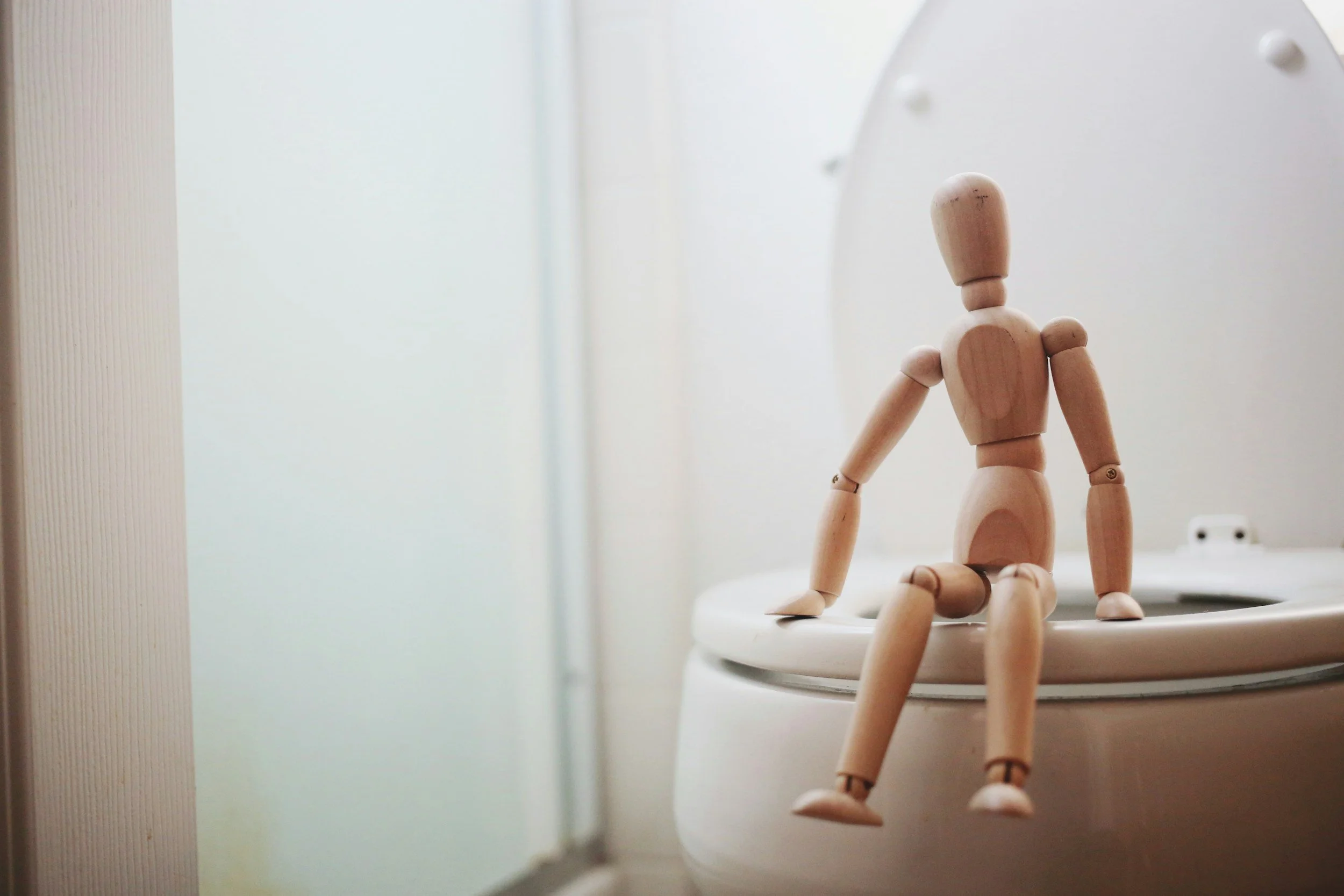
Feeling a little... backed up? Don’t worry, you’re not alone! Constipation affects all ages and approx. 15-20% of the population. 30% of childhood complaints are about constipation and 25% of those children will go on to continue having problems with constipation into adulthood.
You might think, I go to the washroom every morning, I’m not constipated! But you can have a bowel movement everyday and actually be backed up.
When underlying structural and/or biochemical causes of constipation, such as intestinal obstructions, colon strictures/adhesions, medication side effects, conditions like hypothyroidism, diabetes, IBD, neurological conditions, etc. are ruled out, the remaining constipation is called functional constipation.
If you have 2 or more of the following you may have functional constipation:
Straining during more than 25% of bowel movements (BM)
Lumpy or hard stool (Bristol Stool scale 1-2) more than 25% of BM
Sensation of incomplete BM in more than 25% of BM
Sensation of a stool blockage in more than 25% of BM
Manual maneuvers to help with more than 25% of BM
Less than 3 spontaneous (occur without the use of any help like laxatives and excessive force) BM per week
Loose stools are rarely present without the use of laxatives
Not enough criteria for irritable bowel syndrome (IBS)
Functional constipation is quite common and just having more fibre and water may not be enough. Slow movement/motility of the Gastrointestinal tract (GI) tract can occur due to a number of reasons. History of concussions can cause damage to the migratory motor complex in the brain, which contributes to the movement of the GI tract, leading to slowed motility. Other digestive concerns like Small Intestinal Bacterial Overgrowth (SIBO) can also occur due to this slowing.
Low B12 levels can cause slowing of the GI tract for some. B12 helps make serotonin in the gut and the by-products of serotonin help get the digestive system moving. Serotonin also helps make melatonin, so low mood and poor sleep my also be a side effect of low B12 and constipation.
Constipation can also start in the stomach. Issues with low stomach acid can cause improper breakdown of food, leading to decreased digestion further down the digestive tract, contributing to constipation. On the flip side, constipation lower in the digestive system can also create upward pressure into the stomach. This causes the lower esophageal sphincter to open and stomach contents like acid and digestive enzymes to spill into the esophagus, causing acid reflux/heartburn. Therefore, it is important to assess the proper functioning of the stomach as issues with stomach acid can both cause and be caused by constipation.
Healthy movement of stool goes beyond just the digestive system. The liver and gallbladder also play a large role here. One way is through the production of bile. Bile is created in the liver, stored and concentrated in the gallbladder and released into the the digestive system to help breakdown and absorb fat from the diet. If the liver is not producing enough bile and/or the gallbladder is not able to concentrate and store it effectively, the amount and consistency of the bile can change. This will ultimately impact the breakdown of fat in the GI tract and can lead to build up of fat in the intestinal walls, causing constipation.
The microbiome in the GI tract is essential to its proper functioning. Changes to the community of these micro-organisms can impact the motility of the GI tract, by altering intestinal pH and metabolism of bile acids, and cause constipation. Changes to the microbiome can occur for a variety of reasons, such as diet/lifestyle choices, medication use, food poisoning, GI infections, travelling, and environmental toxins.
Many of us suffer with chronic constipation and don’t even know it! If the above sounds like you, speak to one of our Naturopathic Doctors to get a thorough assessment and figure out the underlying cause(s) your constipation. From there, Naturopathic treatments such as diet and lifestyle changes, supplementation with vitamins/minerals and herbal medicine can help you get back to being regular!
References:
Ahmed, S. S., El-Hafez, H. A. A., Mohsen, M., El-Baiomy, A. A., Elkhamisy, E. T., & El-Eshmawy, M. M. (2023). Is vitamin B12 deficiency a risk factor for gastroparesis in patients with type 2 diabetes?. Diabetology & metabolic syndrome, 15(1), 33. https://doi.org/10.1186/s13098-023-01005-0
Afzal, N. A., Tighe, M. P., & Thomson, M. A. (2011). Constipation in children. Italian journal of pediatrics, 37, 28. https://doi.org/10.1186/1824-7288-37-28
Mares, C. R., Săsăran, M. O., & Mărginean, C. O. (2024). The relationship between small intestinal bacterial overgrowth and constipation in children - a comprehensive review. Frontiers in cellular and infection microbiology, 14, 1431660. https://doi.org/10.3389/fcimb.2024.1431660
Mori, S., Tomita, T., Fujimura, K., Asano, H., Ogawa, T., Yamasaki, T., Kondo, T., Kono, T., Tozawa, K., Oshima, T., Fukui, H., Kimura, T., Watari, J., & Miwa, H. (2019). A Randomized Double-blind Placebo-controlled Trial on the Effect of Magnesium Oxide in Patients With Chronic Constipation. Journal of neurogastroenterology and motility, 25(4), 563–575. https://doi.org/10.5056/jnm18194